Anthropic’s “Dreaming” Revolution
Until very recently, the biggest challenge in Artificial Intelligence was getting a model to remember something from one prompt to the next. Today, with massive context windows, the problem has inverted: autonomous agents remember too much.
When you leave an AI agent running for days—reading emails, executing code, browsing the web—its memory fills up with redundant data, dead ends, and contradictions. In the industry, this is known as “Memory Rot.” The agent becomes slow, confused, and prone to hallucinations because it can’t distinguish the signal from the noise.
At the “Code with Claude” conference in May 2026, Anthropic presented a brilliant and poetic solution to this problem for its Claude Managed Agents platform. They called it, simply, “Dreaming”.
What is “Dreaming” in AI?
In humans, sleep isn’t just rest; it’s the time when our brain consolidates memories, discards useless information from the day, and forms new patterns. Anthropic has replicated this biological process in silicon.
Unlike short-term memory (which records everything in real-time as the agent works), “Dreaming” is an asynchronous, offline process. It’s a scheduled background task that runs when the agent is “sleeping” or idle. Its sole job is to curate memory so that, upon “waking,” the agent is smarter, faster, and more precise.
The Workflow: How an Agent Dreams (Step by Step)
Imagine you have a Claude agent configured as a Tier 2 Support Engineer. It has been resolving tickets for a week. Here is the workflow of how its “dreaming” process occurs:
1. Triggering
The weekend arrives, or a scheduled idle window begins. The system pauses the agent’s main operations and initiates the Dreaming protocol.
2. Data Ingestion
The system extracts the agent’s raw history. It can ingest and analyze up to 100 complete transcripts of past sessions, absorbing every resolved ticket, every failed search, and every line of code written.
3. Pattern Analysis
This is where the magic happens. A specialized sub-model analyzes this mountain of data looking for:
- Recurring Mistakes: “I noticed the agent failed three times trying to access the legacy database with obsolete credentials.”
- Successful Workflows: “When the agent used Script X to restart the server, it resolved the ticket 40% faster than with Script Y.”
- Shared Preferences: “The tech lead always asks for bug reports to have a specific format. The agent should standardize this.”
4. Curation and Refinement
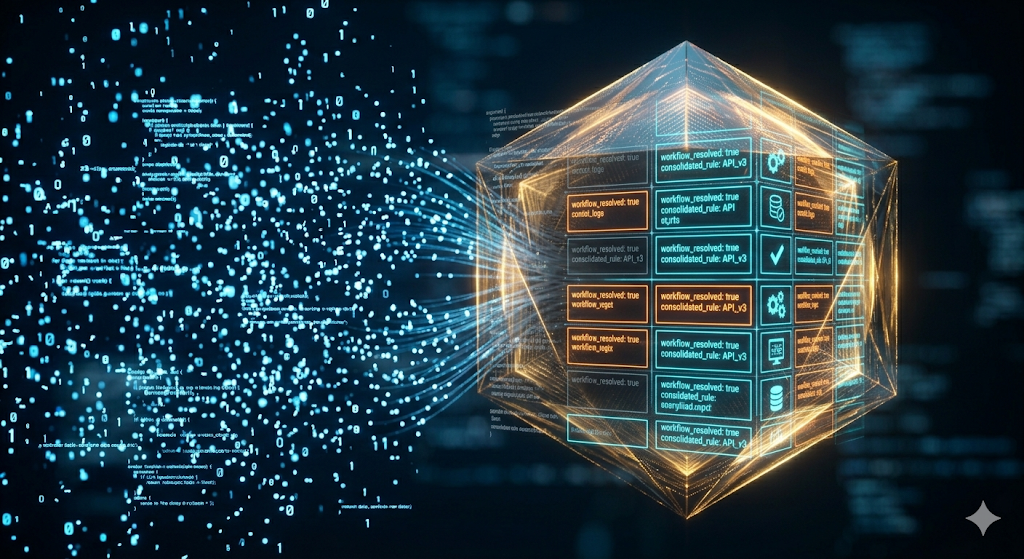
The system does not delete the original logs (for auditing purposes) but creates a reorganized memory layer. It takes all the learning from the pattern analysis and merges duplicate entries, removes irrelevant data, and extracts crystallized rules. The knowledge is compressed, turning from “noise” into “wisdom.”
5. Implementation (Manual or Automatic)
Anthropic knows that enterprises need control. Before this new “knowledge” is injected into the agent’s brain, developers have two options:
- Manual Review: The system presents a report with proposed updates (“I propose to always remember to use Script X“). The developer approves, modifies, or rejects them.
- Automatic: In trusted environments, the agent updates its own knowledge base and wakes up immediately ready to operate with its new guidelines.
Why this changes everything
“Dreaming” represents a fundamental leap in Artificial Intelligence. We are moving from reactive systems (that only do what you ask in the moment) to reflective and self-optimizing systems.
By allowing orchestrated agents to autonomously analyze their own failures and consolidate their successes, Anthropic isn’t just solving a vector database management problem. It is creating, for the first time, a digital workforce that truly learns from experience.
Final Thought: The Age of the Compound Agent
What does this mean for the future of work? Until now, deploying an AI agent meant hitting the “reset” button every few days. The agent you had on Friday was exactly as smart—and as flawed—as the agent you deployed on Monday.
With asynchronous memory curation like “Dreaming,” we are entering the era of compound intelligence in agentic systems. An enterprise won’t just deploy a generic customer service or coding agent; they will cultivate highly specialized digital employees whose expertise compounds over time. The implications are profound: a swarm of multi-agent systems where one agent’s “epiphany” during its dreaming cycle can be synthesized and instantly distributed as a crystallized rule for the entire digital workforce.
We are no longer just prompting AI; we are onboarding it, training it, and letting it sleep on the problem.